
VPNs - Bypassing Censorship

TL;DR: AmneziaWG is faster and simpler. Xray is more flexible and harder to detect. FreeMe can configure both.
They tell us that law cannot hurt freedom. But that is not always true. A law can be valid on paper and still violate the sense of freedom that people carry in their hearts. Most people understand this without needing a legal theory: humans should be able to speak, read, learn, communicate, and search for truth. When the law protects that instinct, it serves freedom. When it punishes it, the law becomes a tool of censorship.
Censorship: What Is Being Blocked?
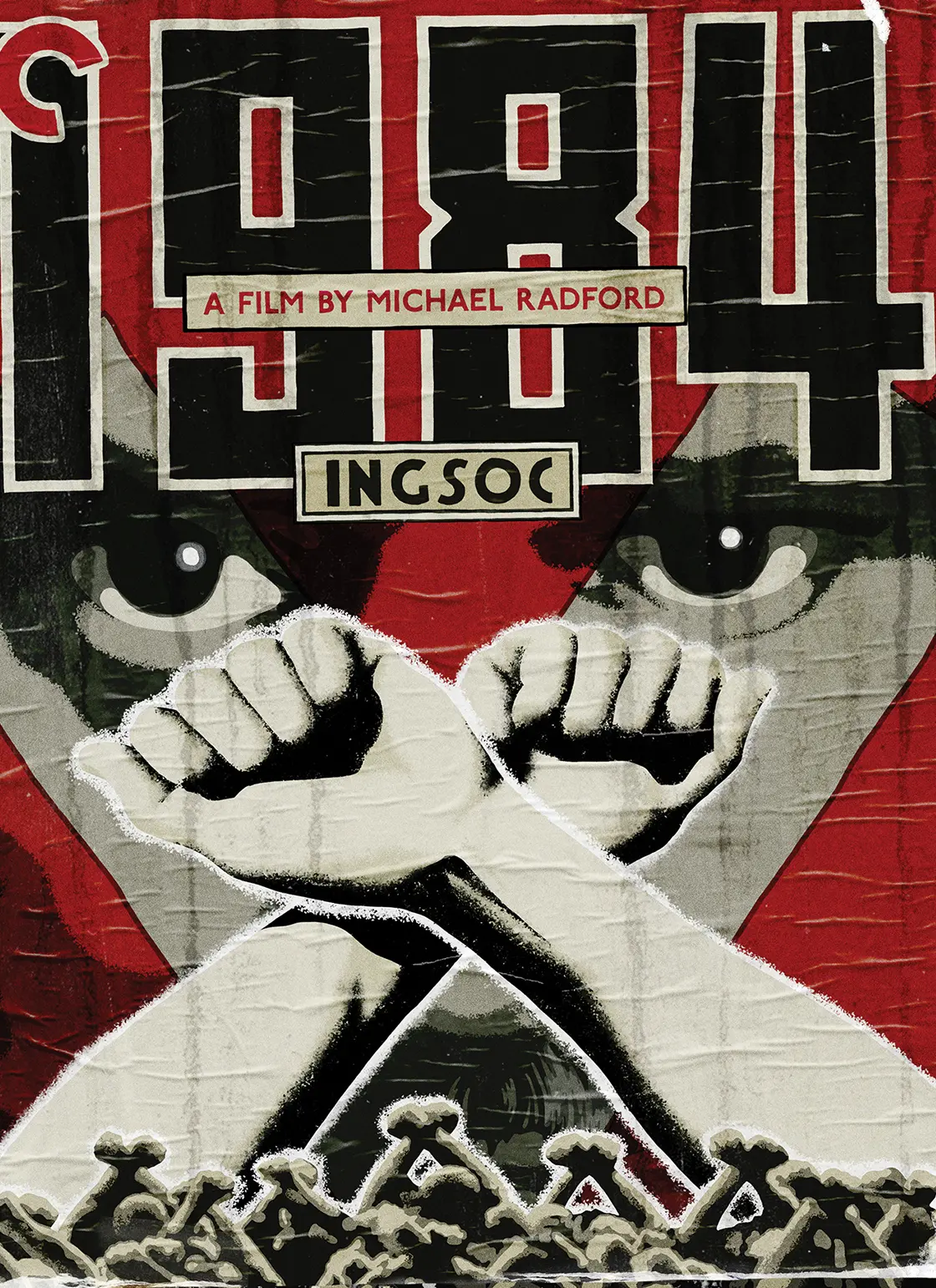
A government does not need to read every message to control people. It only needs enough control points: internet providers, mobile operators, DNS resolvers, domain registrars, hosting providers, app stores, payment systems, social platforms, and police power. When these layers work together, the internet starts to look open from the outside, but inside the country it becomes fenced, filtered, and watched.
The simplest technical method is IP blocking. If a website, VPN server, proxy, or messaging service uses a known IP address, the ISP can block traffic to that address. This is easy to deploy but inaccurate. Many websites can share the same IP address through cloud hosting or CDNs, so blocking one IP can break many unrelated services.
Another common method is DNS blocking or DNS poisoning. When a user asks for a domain name, the DNS resolver can return a fake address, no address, or a government-controlled page. Sometimes the censor does not control the resolver directly but injects a fake DNS reply faster than the real answer can arrive. The result is simple: the user types the correct domain, but the network sends them somewhere else or nowhere at all.
Plain HTTP is exposed traffic. Anyone in the middle of the connection can inspect it, including internet providers and government-controlled network systems. If the traffic is not encrypted, it can be read, logged, filtered, redirected, or blocked.
HTTPS made content filtering harder, but it did not remove metadata. During a TLS connection, the censor may still observe the destination IP, port, timing, packet sizes, and in many cases the Server Name Indication, or SNI. SNI tells the server which hostname the client wants to reach. If the censor sees a banned hostname in the TLS handshake, it can reset or block the connection before the encrypted session is fully established.
Deep Packet Inspection, or DPI, goes further. DPI devices inspect packets at scale and classify traffic by signatures, flow behavior, entropy, timing, packet length, and protocol structure. The censor may not decrypt the content, but it can still recognize that a connection looks like WireGuard, OpenVPN, Tor, QUIC, or some other tool. In modern censorship, the protocol itself becomes suspicious.
Some governments also use active probing. First, the censor passively watches traffic and marks a server as suspicious. Then it connects to that server itself and sends test packets to see whether the server behaves like a proxy or circumvention tool. If the server responds in the wrong way, it can be added to a blacklist. This is one reason why anti-censorship protocols must defend not only against passive detection, but also against fake clients.
Another method is throttling. Instead of fully blocking a service, the network makes it slow, unstable, or almost unusable. This gives the government deniability: it can claim there is a technical problem, congestion, or maintenance. Throttling is often used against video platforms, messaging apps, news websites, and protest communication tools. The user is not officially blocked, but the service becomes painful enough that many people stop using it.
Identity control is another major layer. Real-name SIM registration, ID-based social media accounts, phone-number verification, age verification, biometric checks, and centralized digital identity systems all reduce anonymity. When every account is tied to a real person, censorship becomes easier because punishment becomes easier.
Device-level control is more invasive. Authorities may search phones at borders, force users to unlock devices, require local surveillance apps, pressure companies to weaken encryption, or use spyware.
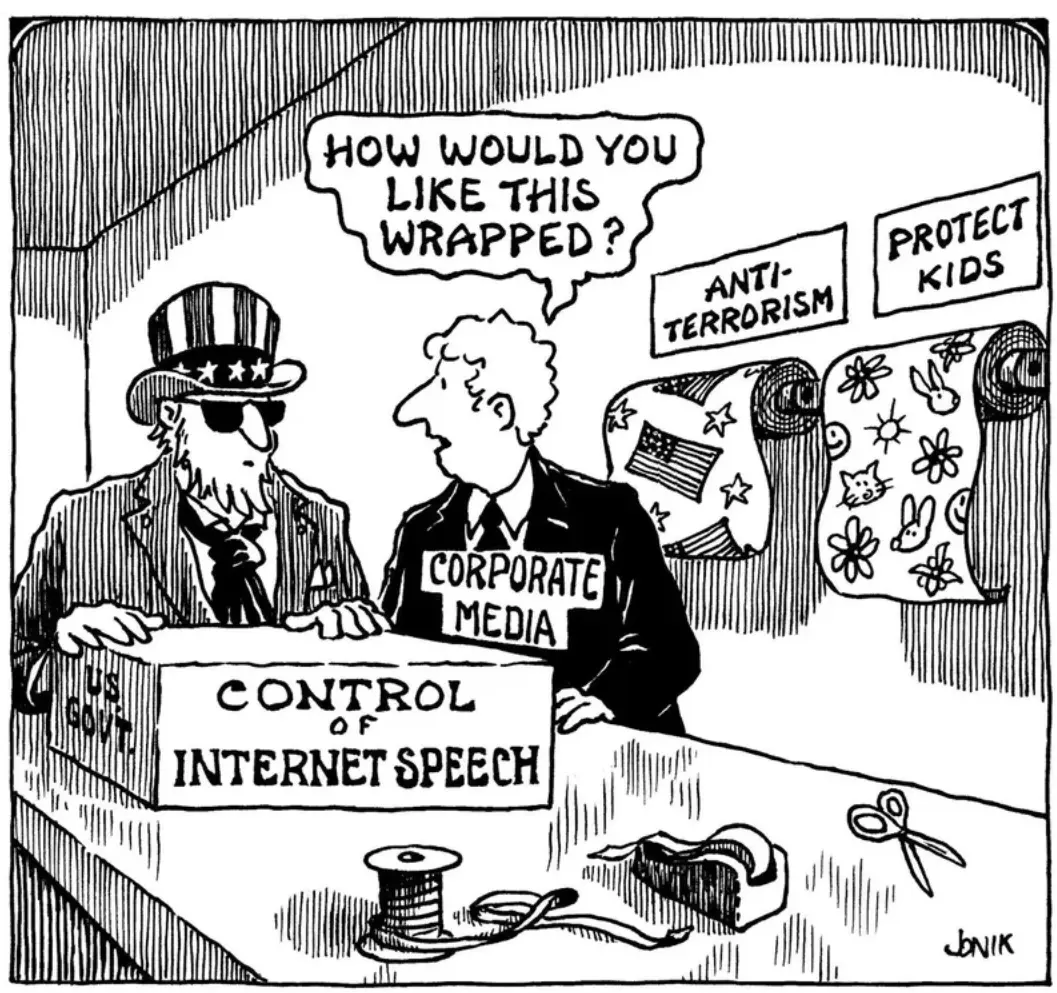
Economic pressure is also part of the traffic-control system. A government can block donations, freeze accounts, fine media organizations, revoke licenses, pressure advertisers, or force hosting and payment providers to cut service. A website can stay technically reachable but still die because its infrastructure and money are attacked.
After all of this, do you still truly believe the government is on your side?
Solution
This is where Xray and AmneziaWG become practical solutions. AmneziaWG helps when ordinary VPN traffic is detected or blocked, because it keeps the speed and simplicity of WireGuard while making the traffic harder for DPI systems to recognize. Xray helps when censorship is stronger and more selective, because it can route traffic through flexible proxy chains and make connections look closer to normal HTTPS traffic. They do not remove censorship completely, but they give users better tools to bypass network restrictions, avoid simple fingerprinting, and keep access to information when direct connections are blocked.
How Xray Technically Works?

One of the strongest direct Xray setups is VLESS + RAW/TCP + REALITY + Vision.
VLESS is the proxy protocol. It carries traffic between the Xray client and the Xray server and identifies the user with a UUID. It is lightweight, stateless, and commonly used as the base protocol for modern Xray configurations.
RAW/TCP is the transport layer. Older guides often call it TCP, but in newer Xray terminology it is called RAW. It means Xray is not wrapping traffic inside WebSocket, gRPC, or another HTTP-based transport. It sends proxy traffic directly over a normal TCP connection.
REALITY is the camouflage layer. Its job is not only encryption, but also appearance. A censor does not always need to decrypt traffic to block it. It can block traffic if the handshake looks like a known VPN or proxy. REALITY tries to make the connection look closer to ordinary TLS traffic related to a normal website, instead of exposing an obvious proxy handshake.
Vision is the flow mode. It is used with VLESS to improve performance and reduce suspicious TLS-in-TLS behavior. Without this, encrypted proxy traffic can sometimes create patterns that look different from normal browser traffic. Vision helps the connection behave more naturally and efficiently.
From the censor’s point of view, this setup should not look like a classic VPN tunnel. It should look closer to ordinary encrypted web traffic. This matters because modern censorship often detects traffic by fingerprint, not by reading the encrypted content.
But this setup is not magic. It can still fail if the server IP is blocked, the hosting provider is heavily targeted, the REALITY target is badly chosen, DNS leaks outside the tunnel, or the censor blocks suspicious foreign VPS traffic by behavior instead of protocol fingerprint.
The CDN setup connects through a CDN and focuses on hiding the origin server behind large shared infrastructure.
The basic path looks like this:
User app → local Xray client → VLESS over XHTTP → TLS connection → CDN edge → origin Xray server → internet
VLESS is the proxy protocol. It carries the user’s traffic between the Xray client and the Xray server. It identifies the user and creates the logical tunnel.
XHTTP is the transport layer. Instead of sending VLESS directly over raw TCP, XHTTP wraps the traffic inside HTTP-style communication. This matters because CDNs, reverse proxies, and web servers understand HTTP traffic. A CDN cannot forward arbitrary proxy traffic in the same way it forwards normal web requests, but it can forward HTTP-compatible traffic.
TLS is the encryption layer between the client and the CDN domain. From the outside, the connection looks like encrypted HTTPS traffic to a normal domain. The censor sees a user connecting to a CDN-hosted website over port 443, not directly to a private VPS running a proxy.
The CDN is the shield in front of the origin server. The client connects to the CDN edge, and the CDN forwards the XHTTP requests to the real Xray server behind it. This makes blocking harder because the censor cannot simply block one obvious server IP without potentially affecting other services on the same CDN network.
This setup is useful when direct VPS IPs are quickly blocked. If the censor blocks your server IP, a direct REALITY setup may fail. With CDN mode, the visible destination is the CDN edge, not the origin server. The origin IP should stay hidden, otherwise the censor can bypass the CDN and block the server directly.
| Setup | Meaning | Best use | Main strength | Main weakness |
|---|---|---|---|---|
| VLESS + RAW/TCP + REALITY + Vision | Direct Xray connection to your server | When direct TCP/443 works | Strong camouflage and high performance | Server IP is exposed and can be blocked |
| VLESS + XHTTP + TLS + CDN | Xray traffic goes through a CDN before reaching your server | When direct VPS IPs are blocked quickly | Hides origin server behind CDN infrastructure | More complex and usually slower |
What Is AmneziaWG?
AmneziaWG is a WireGuard-based VPN protocol designed for censored networks. Standard WireGuard is fast and secure, but its packet types, handshake sizes, and UDP behavior are easy for DPI systems to recognize. AmneziaWG keeps WireGuard’s cryptographic core but changes the visible packet shape: it modifies headers, adds random padding, sends junk packets before handshakes, and can mimic common UDP protocols. This makes it useful when normal WireGuard is blocked by fingerprinting, while keeping the speed and simplicity of a VPN tunnel.
The main strength of AmneziaWG is performance and usability. The main weakness is that it is still UDP-based and can be affected by networks that block or heavily throttle UDP. It is also less flexible than Xray for application-layer routing and complex proxy chains.
Xray vs AmneziaWG
| Category | Xray | AmneziaWG |
|---|---|---|
| Primary role | Flexible proxy platform | VPN tunnel protocol |
| Common use | VLESS + REALITY proxying, routing, chaining | Full-device VPN with WireGuard-like behavior |
| Transport style | Usually TCP/TLS-like or advanced transports | UDP-based WireGuard-style tunnel |
| Anti-censorship method | TLS camouflage, protocol flexibility, routing control | Packet/header obfuscation and UDP protocol mimicry |
| Performance | Can be fast, but depends heavily on transport and config | Usually high, similar in spirit to WireGuard |
| Routing | Very granular | Usually system-level VPN routing |
| Client complexity | Medium to high | Low to medium |
| Best fit | Harsh censorship, domain-based routing, proxy chaining | Fast VPN access where UDP works |
| Weak point | Misconfiguration, fingerprinting, operational complexity | UDP blocking, limited routing flexibility |
| Operator skill required | Higher | Lower |
Bonus: A 2-Hop Xray + AmneziaWG Setup
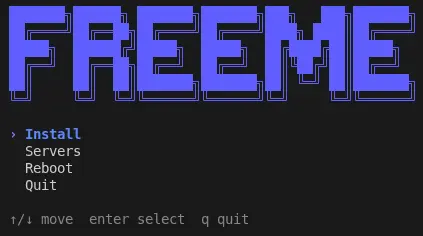
FreeMe is a terminal‑UI tool designed to automate the setup of a secure, chained VPN across two Ubuntu servers. The tool enforces strict firewall rules and disables logging in the generated configurations to reduce accidental exposure.
Common Pitfalls
-
Using widely copied configurations. If thousands of servers use the same parameters, ports, fingerprints, or camouflage targets, the configuration itself becomes a signature.
-
Choosing a poor REALITY target. The camouflage target should be stable, reachable, and believable from the server’s network position. If the target’s behavior is inconsistent, the proxy may stand out.
-
Ignoring UDP blocking. AmneziaWG can work very well, but some networks degrade or block UDP. In those cases, a TCP-based or TLS-like Xray transport may be more reliable.
-
DNS leakage. Even if traffic goes through a tunnel, DNS queries may still go to a local resolver unless the client is configured correctly.
-
Bad routing. Split tunneling is powerful, but mistakes can send sensitive traffic directly while only some applications use the proxy.
-
Weak server hygiene. Exposed panels, reused passwords, old kernels, open management ports, and missing firewall rules can defeat an otherwise strong network design.
Conclusion
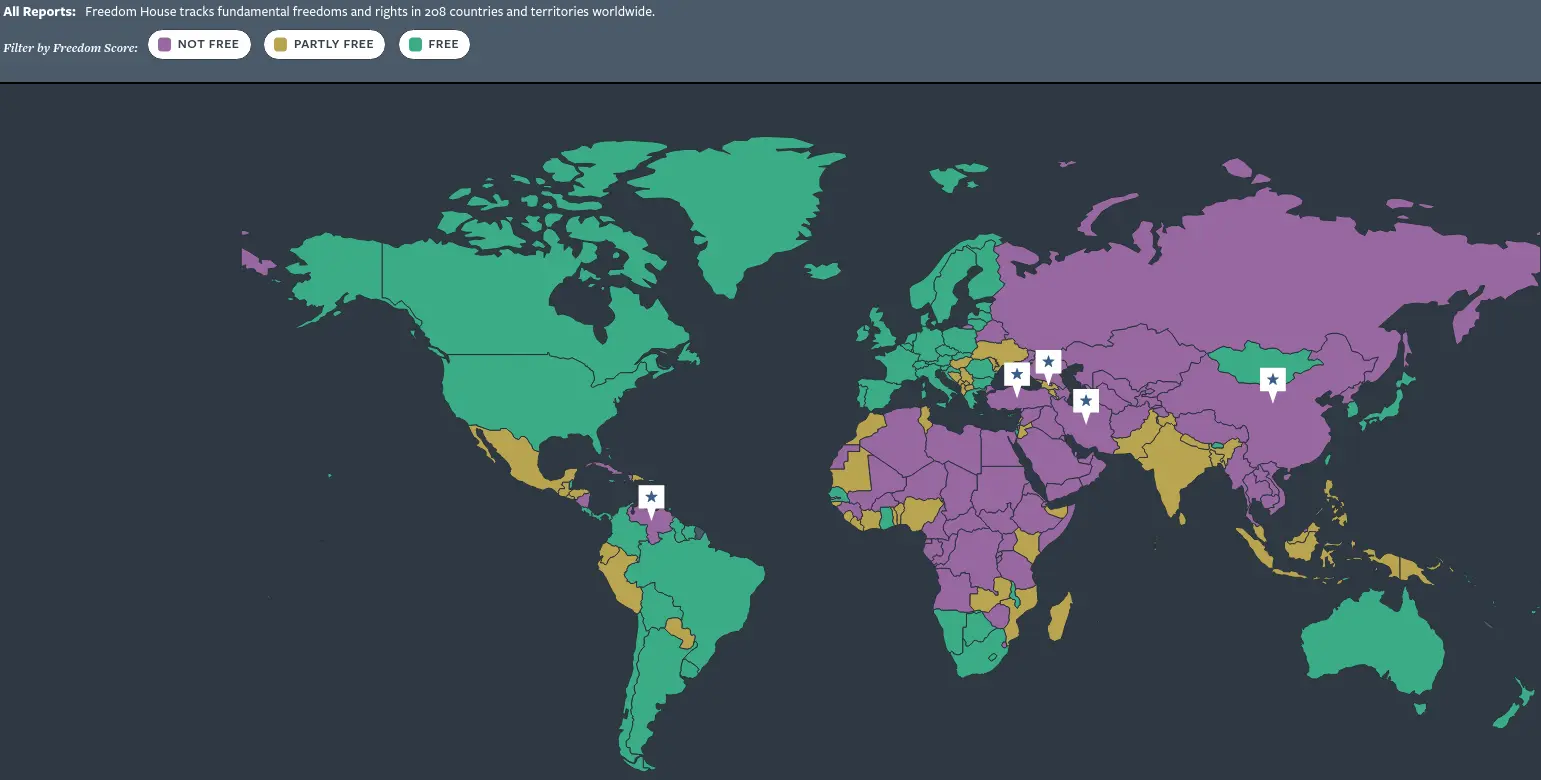
Even freedom maps do not reflect reality. You shouldn’t blindly trust them. Some countries may appear open from the outside, while within the system, freedom acts like cheese in a mousetrap: people are allowed to move about, speak their minds, and seek information, but at the same time, they may be monitored, flagged, or punished.
This is especially dangerous in countries that appear to be “the most progressive”: control there may be more subtle, less obvious, and normalized. Instead of outright blocking, people may face surveillance, legal pressure, platform rules, identity checks, and social punishment. For the average person, this still generates real fear and restricts real freedom.
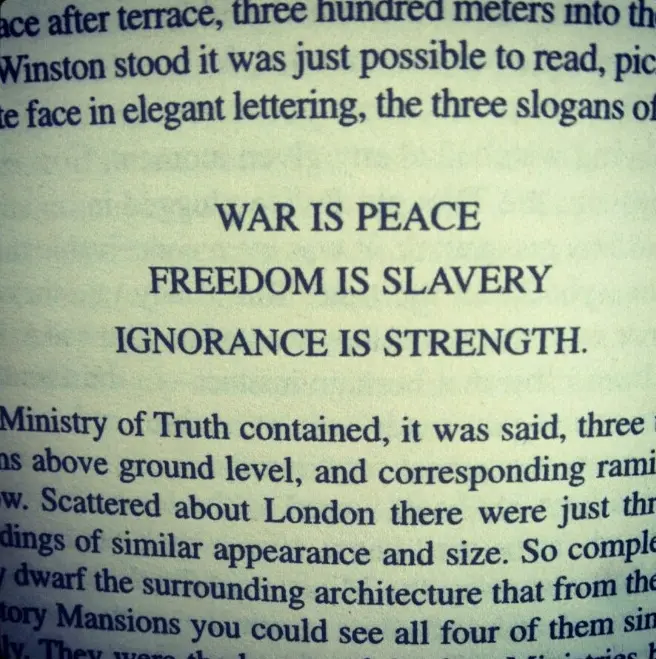
It is also difficult to experience true freedom in a world where governments influence schools, the media, laws, online platforms, and public opinion. If people are taught from childhood what they are allowed to think, then freedom cannot be measured solely by laws or internet restrictions.
That is precisely why a free Internet is essential. People need a place where they can communicate with one another directly. This allows individuals to develop their own dreams, ideas, desires, and perspectives. The Internet should not be merely a controlled stream of approved information. It should be a space where people can freely search, compare, ask questions, and communicate.